

Every parent wants the best for their children. We strive to provide good education, health, and comfort. But in the process, many parents unintentionally prioritize dunya (worldly success) over deen (faith).
The Qur’an warns us:
“But you prefer the worldly life, while the Hereafter is better and more enduring.” (Qur’an 87:16-17)
If our children grow up excelling in academics, sports, or careers but neglect their faith, have we truly succeeded as parents? True success lies in raising children whose hearts are anchored in deen—who see dunya as a tool, not the ultimate goal.
This blog explores practical, Sunnah-based steps parents can take daily to raise kids who value deen over dunya, without rejecting the blessings of dunya.
Islam does not reject dunya. Rather, it teaches us to use dunya in service of deen.
Our goal as parents is to teach kids to love Allah and His Messenger ﷺ so deeply that deen naturally becomes their priority—even while they excel in worldly responsibilities.
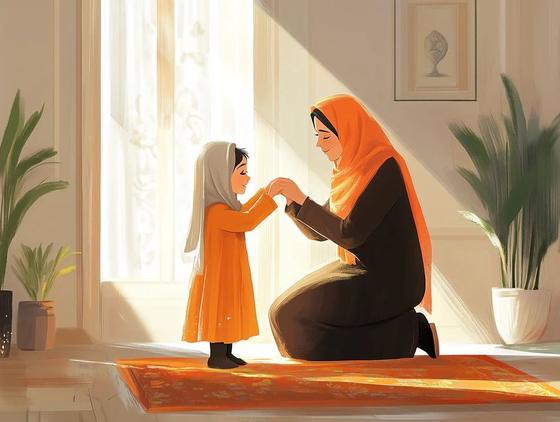
Children copy what they see. If parents rush for salah, show gratitude, and make deen central, children absorb it.
Tip: Narrate your actions: “We’re going to pray because talking to Allah is more important than finishing this show.”
Salah is the ultimate marker of valuing deen.
Outcome: Kids see prayer as a natural anchor, not an interruption.
The Qur’an connects children to Allah directly.
Outcome: Kids see Qur’an as guidance, not just recitation.
Stories bring deen alive.
Activity: Weekly story circle where children retell stories and share lessons.
Parents often celebrate school awards but overlook Qur’an achievements.
Outcome: Kids learn that deen accomplishments matter most.
Teach children the difference early.
Example: “Look how fast this ice cream melts. That’s dunya. But Jannah is forever.”
Charity connects hearts to Allah and detaches from dunya.
Outcome: Children learn joy from giving, not hoarding.
Yes, aim for academic excellence—but not at the expense of deen.
Phrase: “We want you to be a good doctor, but more importantly, a good Muslim doctor.”
Children surrounded by ads, influencers, and luxuries crave dunya. All these things combine can create a fair bit of resistance as you try to raise who value deen over dunya. We recommend that you:
Outcome: Children appreciate blessings and avoid entitlement.
Children should see parents turning to Allah in all matters.
Outcome: Kids learn to connect success to Allah, not just effort.
Peer influence can make or break values.
Outcome: Kids normalize deen in their social lives.
Teach children that dunya is short but akhirah is eternal.
Outcome: Kids develop a future-oriented mindset rooted in deen.
Raising kids who value deen over dunya can be a rewarding experience for parents, although you do need to do it consistently each day:
Q: At what age should I start teaching deen over dunya?
A: From the earliest years. Even toddlers can learn to say Bismillah and prioritize salah times.
Q: How do I handle teens who prefer dunya pleasures?
A: Keep communication open, remind gently, and be consistent in family practices. Encourage youth-friendly Islamic environments.
Q: Does prioritizing deen mean ignoring dunya success?
A: No. Islam encourages excellence in all fields. The key is balance—using dunya in service of deen.
Raising children who value deen over dunya requires intentional parenting. It’s not about depriving them of dunya—it’s about showing them that dunya is temporary, a bridge to the eternal life of akhirah.
By modelling faith, prioritizing salah, celebrating Qur’an milestones, and keeping Allah central in daily life, parents raise kids who see deen as their compass.
In the end, the greatest inheritance parents can give is not wealth, degrees, or property—it is faith, taqwa, and love for Allah. With these, children will thrive in dunya while preparing for Jannah in the akhirah.
Published 7 October 2025 in Parenting. Questions? Get in touch.
There’s no questioning the well-researched fact that children absorb lessons faster in their early years than at any…
Read more →
In today’s fast-paced world, children don’t just need academic skills—they need emotional intelligence (EQ). Emotional…
Read more →
Raising children is not simply about providing food, clothing, and education. In Islam, it is a sacred amanah (trust)—a…
Read more →Thirty minutes, your student numbers, an honest answer about whether we are a fit. Onboarding, training and data migration are included — there is nothing to sign to find out.