
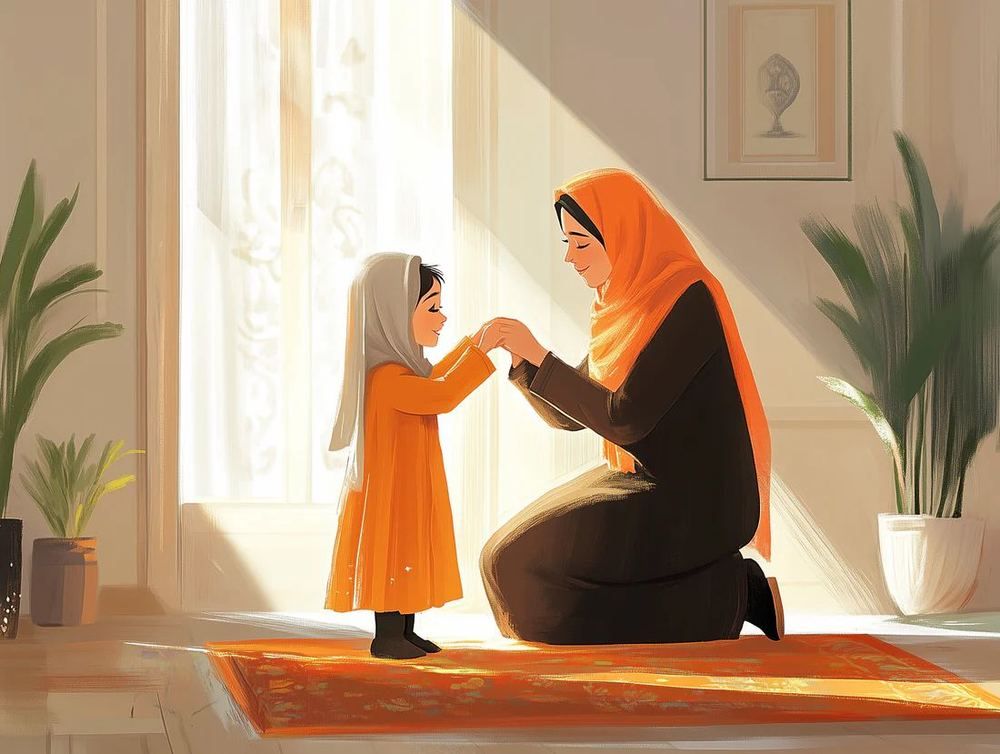
There’s no questioning the well-researched fact that children absorb lessons faster in their early years than at any other stage. This is when their sense of identity, values, and behaviour begins to take shape. Among the most important lessons we can give them are modesty (haya) and self-respect.
The Prophet Muhammad ﷺ said:
“Every religion has its distinct characteristic, and the distinct characteristic of Islam is modesty.” (Ibn Majah)
Teaching children modesty and self-respect isn’t just about clothing or external behaviour. It’s about nurturing self-awareness, dignity, and respect for oneself and others. Self-respect ensures children value themselves as honoured creations of Allah, while modesty teaches them to interact with humility and care.
But how can parents plant these values in the hearts of toddlers and young children? This blog explores daily, practical ways on teaching children modesty and self-respect in the early years.
Haya is broader than shyness—it is a state of heart and character.
Teaching haya to children isn’t about making them fearful—it’s about helping them grow into confident, respectful Muslims who carry themselves with dignity.
Self-respect is the internal strength to:
Children with self-respect are less likely to engage in harmful behaviours and more likely to maintain their values in challenging environments.
Teaching children modesty and the self-respect in the early years is crucial for a number of reasons, including:
Children imitate what they see. If parents dress modestly, speak respectfully, and avoid arrogance, children will follow suit.
Tip: Narrate your choices: “We cover our bodies because Allah loves modesty.”
Respecting privacy is one of the earliest steps in modesty.
Benefit: Children learn dignity and boundaries.
Frame modesty as something beautiful and loved by Allah.
Modesty shows in words.
Activity Idea: Role-play conversations and point out respectful words.
Even toddlers can learn to dress modestly.
Tip: Involve children in choosing modest clothes they feel happy in.
Self-respect isn’t pride—it’s balance.
Activity Idea: Gratitude circles—each family member names a blessing and says Alhamdulillah.
Make respect part of the family culture.
Benefit: Children learn self-respect by respecting others.
Children absorb values through stories.
Tip: After stories, ask: “What lesson do we learn?”
Friends influence behaviour and can be a key factor in teaching children modesty and self-respect.
Benefit: Builds confidence to uphold self-respect.
In a world obsessed with looks, teach kids that true beauty is in character.
Teaching children modesty and self-respect can be an especially rewarding experiencing for parents, although you may very well encounter challenges along the way:
Challenge 1: Modern Media Influence
Children are exposed to immodest role models.
Challenge 2: Peer Pressure
Friends may mock modesty.
Challenge 3: Fear vs. Love
Some parents teach modesty through shame.
Q: At what age should I begin teaching modesty?
A: From the earliest years—simple habits like saying Bismillah before dressing and respecting privacy can begin at age 3.
Q: How do I avoid making modesty feel like a burden?
A: Emphasize its beauty and Allah’s love for it, not fear of shame.
Q: What if my child resists modest clothing?
A: Involve them in choosing outfits they like within modest guidelines.
Q: Can modesty make kids shy or lack confidence?
A: True modesty builds dignity and respect—it doesn’t mean weakness. Combine it with teaching self-respect.
Teaching modesty and self-respect in early childhood is not about strict rules—it’s about planting seeds of dignity, awareness, and love for Allah. When parents model modesty, create respectful family culture, and nurture inner strength, children grow into confident Muslims who carry themselves with grace.
Remember: modesty is not limiting—it is empowering. It teaches children to value themselves, respect others, and live with hearts rooted in faith.
By starting early, parents give their children a gift that lasts a lifetime: the ability to walk through this world with self-respect, humility, and a beaming iman, which they will ultimately pass down to their children someday, in shaa allah.
Published 7 October 2025 in Parenting. Questions? Get in touch.
Every parent wants the best for their children. We strive to provide good education, health, and comfort. But in the…
Read more →
In today’s fast-paced world, children don’t just need academic skills—they need emotional intelligence (EQ). Emotional…
Read more →
Raising children is not simply about providing food, clothing, and education. In Islam, it is a sacred amanah (trust)—a…
Read more →Thirty minutes, your student numbers, an honest answer about whether we are a fit. Onboarding, training and data migration are included — there is nothing to sign to find out.