

In a world filled with distractions, training and grooming children who love the Qur’an, and helping them form a genuine bond with it, is one of the greatest gifts a parent can offer.
While memorising verses and attending Islamic classes are essential, the real goal is to help children connect emotionally and spiritually with the Book of Allah.
This goes well beyond the usual kids’ Qur’an education or teaching Qur’an to kids on a weekly basis; when children learn to love the Book of Allah, they carry this light in their heart throughout their lives — something which influences everything from the choices they make, to how it shapes their character. It also opens to doors to barakah (blessing), not just within their families but also the community at large.
So, how can we, as parents and educators, nurture that deep love for the Qur’an in young hearts? How can we make teaching Qur’an to kids a fun, innovative, and inspiring journey?
Here is a comprehensive, practical, and spiritually grounded guide to help you with just that:
Children form their emotional connections early — even before birth. Many mothers make it a habit to recite the Qur’an during pregnancy, surrounding the unborn child with the soothing sounds, hums, and rhythms of Allah’s words. Once your child is born play soft Qur’an recitations (or recite it yourself) at home during calm moments or bedtime.
This early exposure turns the Qur’an into a source of comfort and familiarity, much like a lullaby or the voice of a parent. It sets the tone for the Qur’an being part of the child’s daily world — not just something learned in a madrasa.
Children learn better from actions rather than words. If they see you reading the Qur’an regularly, reflecting on its meanings, or listening to it with focus and awe, they’ll understand its importance.
Let your child observe you:
These moments show children that the Qur’an isn’t just a school subject — it’s a living guide, a friend, and a source of strength.
Allah has filled the Qur’an with powerful stories — of Prophets, nations, animals, miracles, and warnings. These stories naturally appeal to children’s curiosity and imagination.
Instead of simply asking a child to memorise Surah Al-Fil, for example, try this:
By engaging them creatively, you help them feel the emotion and understand the message, which builds a stronger love for what they’re learning.
Positive reinforcement is crucial when it comes to ‘how to raise children who love the Qur’an’. Instead of only focusing on how much they’ve memorised, celebrate effort, progress, and sincerity.
Ideas for celebration:
Make these moments joyful. Children will associate the Qur’an with happiness, achievement, and family bonding.
Memorisation is important, but it should not be separated from understanding or take priority over it. Even young children can grasp the basic meaning of verses when taught in simple language.
For example:
When children connect verses to real-life experiences, the Qur’an becomes a living, relevant book — not just lines to repeat. This is a very important kids’ Qur’an education strategy that parents can use throughout their child’s upbringing to truly instill a love for Allah’s Book from an early age.
Overloading kids with long Qur’an sessions can create frustration. Instead, focus on consistency over intensity.
Tips for a balanced routine:
Create an environment that says: “The Qur’an is part of who we are — not just what we do.”
Children absorb the values of their environment. Here’s how to make the Qur’an a natural part of their surroundings:
Even without formal lessons, these moments build love and familiarity for the words of Allah.
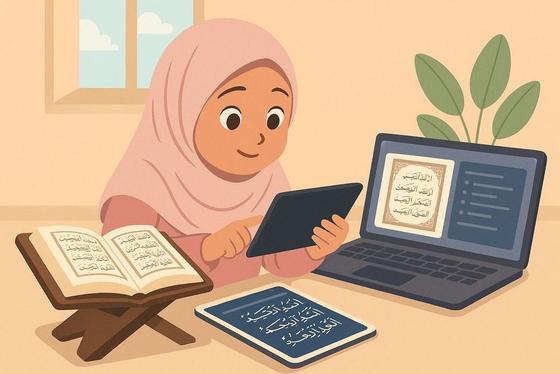
Every child learns differently. Some are auditory learners, some visual, some kinaesthetic (children who learn through physical activity and hands-on experiences). Choose resources that match their style:
This personalised approach keeps learning fun and effective, leading to deeper emotional engagement.
As children grow older, they may wonder: What does the Qur’an have to do with my life?
Use current topics — like friendships, emotions, social media, school stress, etc. — and show how the Qur’an offers guidance.
Example:
Show them that the Qur’an is a timeless source of advice, comfort, hope, and reassurance.
Let your child feel that the Qur’an connects them to a community of believers. Join:
These experiences build social motivation and a sense of belonging around the Qur’an.
The greatest influence is from Allah Himself. Never underestimate the power of dua (supplication). Make it part of your daily prayers:
“O Allah, make the Qur’an the spring of my child’s heart.”
“Ya Allah, let my child find joy in reciting and living by Your words.”
The Prophet Muhammad ﷺ taught us that hearts are in Allah’s hands — so ask Him to guide your children lovingly to His book.
Final Thoughts on teaching Qur’an to Kids
Primary – Children who love the Quran
how to raise children who love the Quran, kids Quran education, Islamic parenting tips, Quran learning for children, teaching Quran to kids, Islamic parenting UK, Sidr School resources
Loving the Qur’an doesn’t come from pressure or punishment — it comes from joy, connection, and consistency; that is truly how you can succeed in raising children who love the Qur’an. Plus, when parents make the Qur’an a source of light in their own lives, children are more likely to follow that path naturally.
At Sidr Productions, we believe that children’s love for Islam should be built through creativity, compassion, and authenticity. That’s why we design Islamic resources that not only educate but inspire.
In the end, our goal isn’t just to raise Qur’an memorizers — it’s to raise Qur’an lovers.
Quick Tips Recap:
Bonus: Explore our Digital Marketing and Design Services to help grow your business or brand
Published 28 June 2025 in Parenting. Questions? Get in touch.
In today’s fast-paced digital world, where children are drawn to screens, games, and interactive platforms, Islamic…
Read more →
As parents and educators striving to raise confident, God-conscious children, one of the most important spiritual…
Read more →
Raising children with a strong Islamic identity starts with meaningful conversations at home. One of the most…
Read more →Thirty minutes, your student numbers, an honest answer about whether we are a fit. Onboarding, training and data migration are included — there is nothing to sign to find out.