
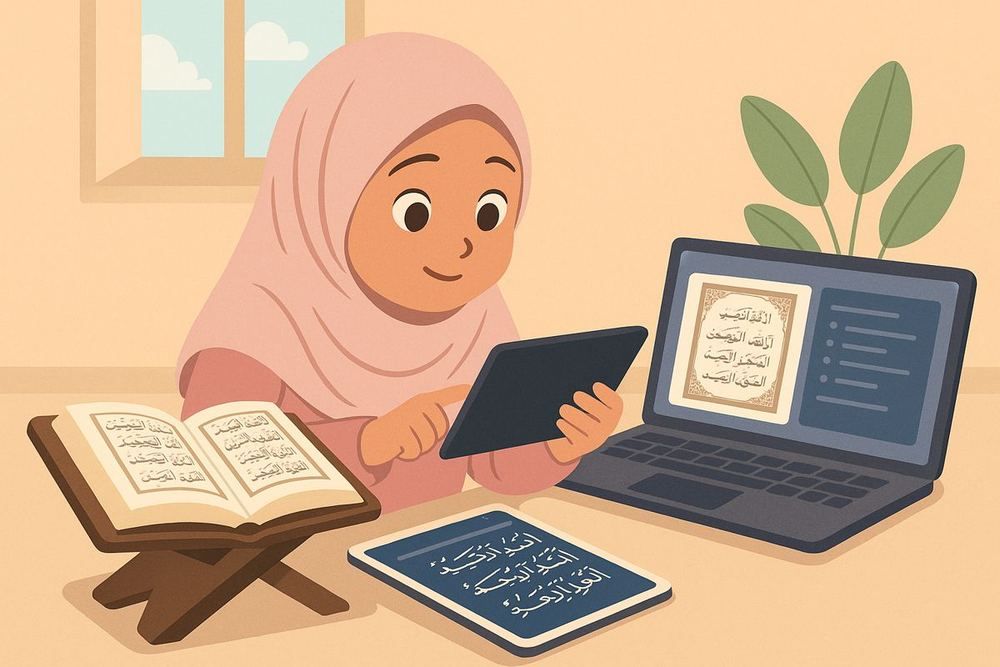
In today’s fast-paced digital world, where children are drawn to screens, games, and interactive platforms, Islamic educators and parents are exploring innovative ways to keep young Muslims engaged in their faith. One popular method is gamification in Islamic education— the use of game-like elements in non-game contexts. But when it comes to religious education, a pressing question arises:
Is gamification in Islamic learning a powerful blessing or a subtle distraction?
This article explores both sides of the argument and offers guidance on how to use gamification in a meaningful, spiritually-aligned way.
What is Gamification in Islamic Education?
Gamification in Islamic education or learning is the integration of game mechanics into learning experiences. These mechanics often include:
In the context of digital Islamic education and learning, gamification might involve:
Why Gamification has Gained Popularity
Children today are digital natives. They learn through visuals, interaction, and instant feedback. Traditional Islamic education tools and methods — such as rote memorisation and passive listening — may not always resonate with them.
Gamified platforms like My Quran Journey, Sidr School, and other Islamic educational apps use storytelling, animation, and progress tracking to:
The Blessings: How Gamification Benefits Islamic Education
Children often struggle with long-term motivation. Gamification for Islamic education and learning offers short-term wins that encourage regular learning.
Example: A child earns a badge for completing Surah Al-Ikhlas five times in a week. This positive reinforcement builds excitement and momentum.
Apps that track daily prayers or Quran recitation help children build daily Islamic habits — a cornerstone of spiritual development.
Example: A 30-day Ramadan challenge with points for fasting, Quran reading, and charity can inspire consistency during the blessed month.
Gamified platforms can simplify and visually explain difficult topics like:
When presented interactively, these subjects become less intimidating and more enjoyable.
Leaderboards and peer challenges can foster a spirit of friendly competition in group settings, encouraging kids to improve together.
Example: A Quran memorisation class uses a weekly quiz to reward top scorers. This boosts confidence and motivates preparation.
Some children are auditory learners, others visual or kinesthetic. Gamification offers multi-sensory learning: quizzes, animations, drag-and-drop activities, sound-based games, and more.
This inclusivity ensures that every child, regardless of learning preference, finds a way to connect with Islamic content.
The Cautions: When Gamification Becomes a Distraction
While the benefits are clear, Islamic educators and parents must also be aware of potential pitfalls. When misused, gamification can undermine the spiritual objectives of learning Islam.
If a child is more focused on collecting points than understanding a Surah or a story/lesson from the Qur’an, they may not internalise the true message it brings to mankind.
Example: A child memorises a Surah quickly to win a game but forgets it within days — or doesn’t grasp its meaning at all.
Islamic education must cultivate sincerity (ikhlas) — doing actions for the sake of Allah alone. Excessive focus on external rewards can weaken this intention.
A child may ask: “What do I get for reading Qur’an?” instead of “How does this please Allah?”
Gamification can become a crutch. If children get used to rewards for every act of ibadah (worship), they may lose interest when rewards aren’t offered.
The goal is to develop intrinsic motivation — love for Allah, curiosity about the Deen, and desire for Jannah — not just extrinsic motivation based on digital points and rewards.
Gamified Islamic apps can become yet another screen-based activity, competing with other games and social media. As such, faith-based gamified learning should never act as a replacement for traditional Quranic learning or teaching your child matters of Deen.
Parents must balance screen usage in digital Islamic education with traditional learning, ensuring that children also engage in ‘offline worship’, family halaqas, and nature-based reminders of Allah.
Finding the Right Balance: Best Practices for Parents and Educators
So, is gamification a blessing or a distraction? The answer lies in how it’s implemented.
Here’s how to make gamification in Islamic education work in harmony with traditional Islamic values practices throughout the centuries:
✅ Set Clear Spiritual Intentions
Always begin any learning — even in a game format — with niyyah (intention). Remind your child that learning about Islam is a way to please Allah, not just to earn stars.
✅ Pair Gamified Learning with Real-Life Practice
This reinforces the real-world application of knowledge.
✅ Reward Internal Growth, Not Just Results
Praise not only scores but also:
This helps shift the focus from external achievements to internal character development.
✅ Use Gamified Tools as a Supplement, Not a Replacement
Islamic learning is deeply personal and relational. Gamification works best when it supports, not replaces:
✅ Monitor Content and Engagement
Choose platforms that are:
My Quran Journey and My School Journey, for example, are designed with authentic content and a child-friendly focus, making these Islamic learning apps for kids an incredibly engaging, inspiring, and fun way to teach your young ones the Qur’an and other aspects of Deen.
Real-World Examples: Gamification Done Right
🌟 My Quran Journey App
Our app uses progress maps, audio interaction, and mini-games to teach children Qur’an and duas while promoting understanding and meaning.
🌟 Sidr School Ramadan Challenge
In 2024, we held a gamified challenge where children earn stars for salah, charity, kindness, and fasting — helping them develop a well-rounded connection with Ramadan.
🌟 Islamic Memory Games
Simple card-matching games that help young learners remember the names of prophets, pillars of faith, and more — while having fun with friends or family.
Conclusion: A Tool, Not a Goal
Gamification in Islamic learning is like the salt we put in our food — when used wisely, it enhances the flavour. When overused, it turns the food sour or overpowers the purpose, so to speak.
Therefore, when designed and guided properly, gamification in Islamic learning can:
But if misused, it risks reducing Islam to a game of rewards, rather than a spiritual journey of the heart.
As parents and educators, our mission is to guide children toward Allah — and if gamification helps us reach them in today’s world, we must use it mindfully, with purpose, with the right intentions and, of course, with prayer and dua.
Final Takeaways:
Published 28 June 2025 in Parenting. Questions? Get in touch.
In a world filled with distractions, training and grooming children who love the Qur’an, and helping them form a…
Read more →
As parents and educators striving to raise confident, God-conscious children, one of the most important spiritual…
Read more →
Raising children with a strong Islamic identity starts with meaningful conversations at home. One of the most…
Read more →Thirty minutes, your student numbers, an honest answer about whether we are a fit. Onboarding, training and data migration are included — there is nothing to sign to find out.