
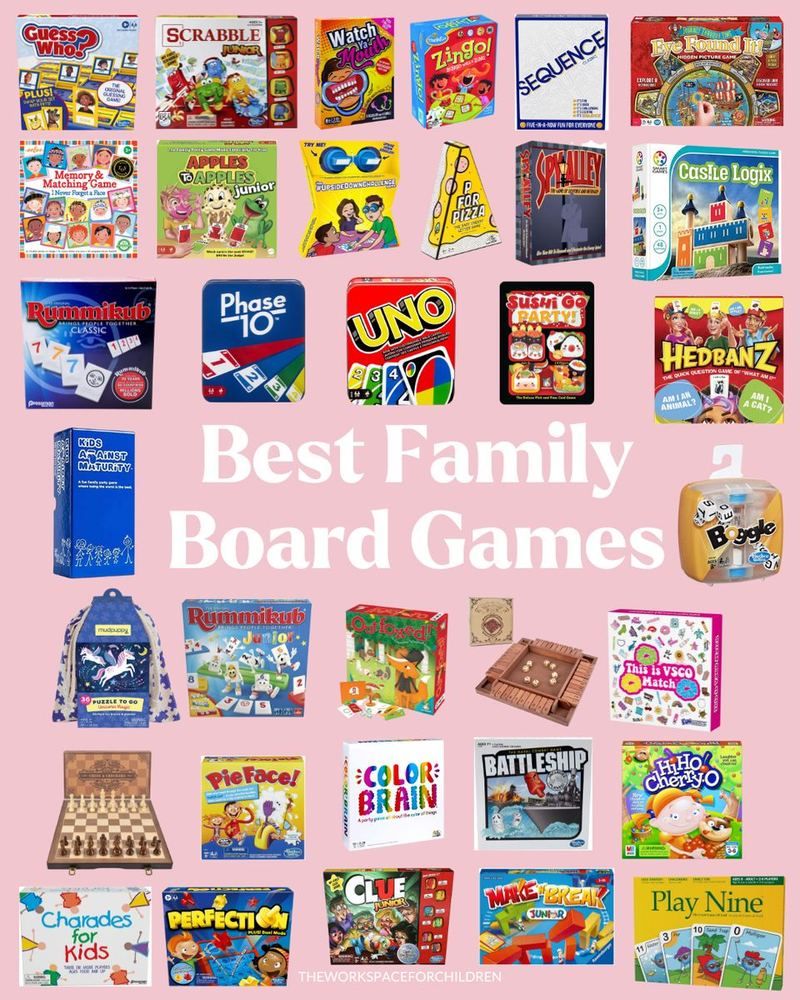
Family board games are more than rainy-day distractions—they’re mini-classrooms disguised as fun. For parents, games offer a chance to teach life skills without lectures: teamwork, patience, problem-solving, creativity, and even math. For kids, they offer the joy of play while secretly developing brains.
But let’s be honest. Some games cause battles, tears, and endless arguments (hello, Monopoly!). That’s why parents need a curated list of games that build brains, not battles—games where the focus is on fun, fairness, and learning.
In this blog, we’ll explore the top 10 family board games that:
When choosing family board games, think beyond just the usual “fun”.
So, look for:
And, without further ado, here are the top 10 family board games that both you and the little ones are going to no doubt enjoy immensely:
Best For: Ages 6+ (Junior), Ages 10+ (Classic)
How it Builds Brains:
Catan teaches strategy, resource management, and negotiation. Players learn to collect resources, trade with others, and expand their settlements.
Parent Bonus: Negotiation skills are life skills—kids learn how to ask, compromise, and make deals without arguments.
No Battles Tip: Use the junior version for younger kids to simplify rules. For older kids, set a time cap so the game doesn’t drag.
Best For: Ages 8+
How it Builds Brains:
This game strengthens geography knowledge, pattern recognition, and planning. Players collect train cards to claim routes across a map.
Parent Bonus: Kids visualize long-term strategy while practicing map-reading and decision-making.
No Battles Tip: Keep focus on building routes, not blocking opponents too aggressively. Encourage “positive play.”
Best For: Ages 6+
How it Builds Brains:
Qwirkle is a mix of dominoes and Scrabble, using colors and shapes instead of words. It develops pattern recognition, math skills, and spatial reasoning.
Parent Bonus: Great for kids who aren’t readers yet—everyone can play on equal terms.
No Battles Tip: Celebrate “Qwirkle” moments (when someone scores big) as family wins.
Best For: Ages 8+
How it Builds Brains:
Another fantastic game to play among our top 10 family board games to play. Players give one-word clues to link pictures, building language skills, lateral thinking, and creativity.
Parent Bonus: Encourages teamwork and stretches kids’ vocabulary in a playful way.
No Battles Tip: Play in teams so kids feel supported and avoid the stress of solo pressure.
Best For: Ages 5+
How it Builds Brains:
Blokus develops spatial intelligence, problem-solving, and planning. Players place Tetris-like pieces on a board, fitting them in while blocking opponents.
Parent Bonus: Quick setup, simple rules, and brilliant for visual learners.
No Battles Tip: Frame the game as a puzzle challenge instead of a win-or-lose competition.
Best For: Ages 7+
How it Builds Brains:
This is a cooperative adventure game where players work together to save treasures before the island sinks. It teaches teamwork, critical thinking, and risk management.
Parent Bonus: Unlike many games, it’s all of you versus the game—perfect for reducing sibling fights.
No Battles Tip: Stress the teamwork element: “We win or lose together.”
Best For: Ages 8+
How it Builds Brains:
Dixit uses surreal illustrations and storytelling. It enhances imagination, empathy, and communication. Players describe a card with a word or phrase, and others guess.
Parent Bonus: Great for sparking creative discussions and storytelling at home.
No Battles Tip: Focus on laughter and storytelling rather than points.
Best For: Ages 6+
How it Builds Brains:
This puzzle game challenges players to free a trapped car by moving blocking vehicles. It strengthens logic, sequencing, and problem-solving.
Parent Bonus: Solo play is possible—ideal for quiet moments when parents need a breather.
No Battles Tip: Take turns solving puzzles and cheer for each other’s success.
Best For: Ages 7+
How it Builds Brains:
This game on our top 10 family board games list sees players place tiles to build cities, roads, and fields. It develops spatial reasoning, strategy, and forward planning.
Parent Bonus: Combines creativity (map building) with light competition.
No Battles Tip: Use the “family scoring variant” to keep games positive for younger players.
Best For: Ages 4–8
How it Builds Brains:
This cooperative “whodunit” teaches logic, deduction, and collaboration. Kids work together to catch a thief fox.
Parent Bonus: Perfect introduction to problem-solving games for preschool and early elementary kids.
No Battles Tip: Since it’s cooperative, younger siblings don’t feel left out or “defeated.”
Each of these handpicked choices from the above list of top 10 family board games offer something unique for parents:
Rather than battle each other’s brains and wits, this list of top 10 family board games can be enjoyed collectively as a family activity that helps build brains. However, to make for smooth and memorable game nights, we do recommend the following:
Board games can help improve your child’s cognitive development in many key ways, including:
Family board games are more than entertainment. They’re low-cost classrooms, memory-makers, and peace-builders. By choosing games that emphasize cooperation, creativity, and learning, parents can avoid endless “battlefield” nights and instead create an environment where kids’ brains and bonds grow together.
So, when it’s family game night, skip the stress. Pull out one of these 10 brain-building games and watch your kids thrive—not fight.
Published 1 October 2025 in Parenting. Questions? Get in touch.

Every parent wants their child to feel safe, confident, and happy. But for many families, anxiety sneaks into everyday…
Read more →
Every family needs an agreed-upon set of rules to keep their humble abode running smoothly, household rules that…
Read more →
Open Instagram, step into a shopping mall, or listen to children’s conversations at school, and you’ll notice a common…
Read more →Thirty minutes, your student numbers, an honest answer about whether we are a fit. Onboarding, training and data migration are included — there is nothing to sign to find out.