
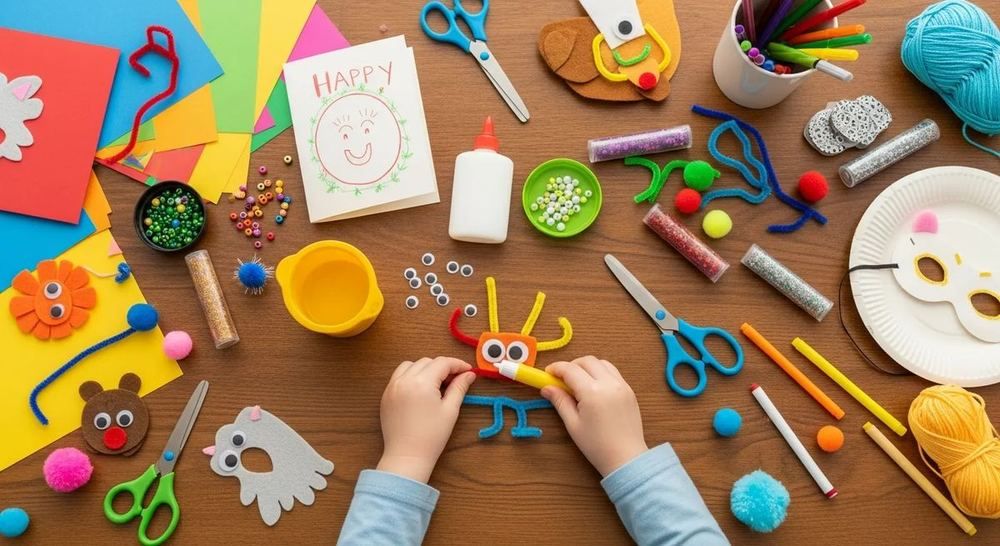
Learning does not begin and end at school. Some of the most meaningful learning experiences happen in kitchens, living rooms, gardens, and everyday moments that do not look like lessons at all. For many parents, however, the idea of supporting learning at home can feel intimidating. There is a common belief that teaching requires structured plans, specialised materials, or constant effort.
The reality is far simpler. Creative learning at home is less about formal instruction and more about creating opportunities for curiosity, exploration, and connection. Children naturally learn through play, conversation, experimentation, and observation. When parents shift focus from teaching to facilitating discovery, learning becomes both effective and enjoyable.
In 2026, home environments play an increasingly important role in education. Hybrid learning models, digital resources, and changing school expectations mean children often engage with learning beyond classrooms. Parents do not need to replicate school structures. Instead, they can nurture skills that support lifelong learning.
This article explores creative learning activities that fit naturally into everyday life, why they matter for child development, and how parents can approach learning at home without pressure.
Creative learning supports more than academic skills. It develops problem-solving, emotional regulation, communication, and confidence. When children engage in open-ended activities, they practise thinking rather than memorising.
Creativity encourages experimentation. Children learn that mistakes are part of discovery rather than signs of failure. This mindset builds resilience, which is essential for future learning.
Creative activities also strengthen intrinsic motivation. When children feel ownership over exploration, they engage more deeply. Learning becomes something they do, not something done to them.
Parents play a key role by creating environments where curiosity is welcomed.
Learning thrives in spaces where questions are encouraged.
Many parents imagine learning as worksheets or structured tasks. While these can have a place, creative learning often looks informal. It might involve building with household objects, storytelling during bedtime, or exploring nature during a walk.
The goal is not constant activity but meaningful interaction. Everyday experiences provide opportunities for language development, mathematical thinking, and scientific observation.
Redefining learning reduces pressure. Parents do not need elaborate setups. They need attention, openness, and willingness to explore alongside their child.
Home becomes a learning environment by design, not by schedule.
Storytelling is one of the most powerful creative learning activities. It develops language skills, imagination, emotional understanding, and memory. Stories allow children to explore ideas safely and practise narrative thinking.
Parents can encourage storytelling by reading together, inventing stories collaboratively, or asking children to describe their day creatively. Open-ended prompts such as “What happens next?” stimulate imagination.
Storytelling does not require books alone. Drawing, acting, or using toys to create narratives also supports expression.
Language grows through interaction.
Stories build cognitive and emotional connections.
Children do not need specialised toys to learn creatively. Household items can become tools for exploration. Boxes turn into buildings, kitchen utensils become instruments, and blankets create imaginative environments.
Open-ended play encourages problem-solving and independent thinking. Children experiment with possibilities rather than following predetermined instructions.
Parents can support this by providing safe materials and allowing time for unstructured play. Observing rather than directing often leads to deeper engagement.
Play is learning in its most natural form.
Freedom fosters creativity.
Art supports fine motor skills, emotional expression, and creative thinking. However, adults sometimes unintentionally limit creativity by focusing on results rather than process.
Encouraging experimentation with colours, textures, and materials helps children explore without fear of mistakes. Activities might include painting with unconventional tools, collage-making, or sculpting with recyclable materials.
The conversation around art matters. Asking children about their choices reinforces reflection and confidence.
Art is not about producing something impressive. It is about exploring possibilities.
Expression supports development.
Science learning at home often begins with simple questions. Why does ice melt? How do plants grow? What happens when colours mix?
Hands-on exploration makes abstract concepts tangible. Activities such as growing seeds, observing weather patterns, or experimenting with water and objects introduce scientific thinking naturally.
Parents do not need detailed explanations. Wondering together models curiosity. Saying “Let’s find out” reinforces investigation.
Science is not limited to laboratories.
Curiosity is the starting point.
Problem-solving is a critical future skill, and creative activities provide ideal practice. Building structures, solving puzzles, and designing solutions to small challenges encourage flexible thinking.
Parents can introduce challenges such as building the tallest tower from limited materials or creating a way to transport objects safely across a room. These tasks develop planning and persistence.
Importantly, allowing children to struggle briefly supports resilience. Immediate solutions reduce learning opportunities.
Problem-solving grows through experience.
Struggle is part of progress.
Cooking combines mathematics, science, language, and life skills. Measuring ingredients introduces numerical concepts. Observing changes during cooking demonstrates scientific processes. Following recipes supports sequencing and reading comprehension.
Involving children in age-appropriate tasks builds independence and confidence. Conversations during cooking also strengthen language development.
Cooking illustrates that learning is embedded in daily life.
Skills transfer beyond the kitchen.
Participation builds competence.
Nature offers endless opportunities for creative learning. Observing insects, collecting leaves, or exploring textures outdoors stimulates sensory development and curiosity.
Outdoor activities encourage movement, which supports cognitive function and emotional regulation. Asking questions about observations develops scientific thinking.
Parents can create simple nature journals where children draw or describe discoveries. Regular outdoor exploration builds awareness and appreciation.
Nature invites wonder.
Learning extends beyond walls.
Music supports memory, rhythm, coordination, and emotional expression. Movement activities such as dancing, rhythm games, or creating simple instruments encourage creativity.
Children can explore sound patterns, compose simple songs, or move in response to music. These experiences strengthen brain connections related to language and motor skills.
Music also provides opportunities for shared joy, which reinforces learning through positive emotion.
Creativity is multisensory.
Movement enhances engagement.
Creative learning thrives when children have opportunities to explore independently. Parents can create accessible spaces with materials for drawing, building, or reading.
Independence builds confidence and self-direction. Children learn to initiate activities rather than waiting for instructions.
Balancing guidance with autonomy is important. Offering support when needed while allowing exploration fosters growth.
Learning becomes self-driven.
Autonomy supports motivation.
Technology can support creative learning when used intentionally. Digital drawing tools, storytelling apps, coding games, and interactive science platforms expand possibilities.
Parents should prioritise creation over passive consumption. Activities that involve making, designing, or problem-solving provide greater developmental benefit.
Setting boundaries around screen time ensures balance with offline experiences.
Technology becomes a tool rather than a distraction.
Intentional use matters.
Conversation is one of the most overlooked learning activities. Discussing experiences, asking open-ended questions, and reflecting together strengthen thinking skills.
Questions such as “What did you notice?” or “How could we try that differently?” encourage deeper processing. Listening attentively reinforces confidence.
Learning often happens through dialogue rather than instruction.
Language shapes understanding.
Connection supports cognition.
Parents sometimes feel pressure to provide constant enrichment. This expectation can create stress and reduce enjoyment for both parent and child.
Creative learning does not require daily elaborate activities. Even brief moments of exploration contribute to development. Consistency matters more than intensity.
Recognising that boredom can spark creativity also helps. Children often generate ideas when given space.
Balance includes rest.
Learning is not a performance.
Creative learning activities can adapt across developmental stages. Younger children benefit from sensory exploration and simple play. Older children may engage in projects, experiments, and creative problem-solving.
Parents can adjust complexity while maintaining open-ended approaches. The goal remains curiosity rather than completion.
Development is continuous.
Flexibility supports relevance.
Creative activities support emotional wellbeing. Expression through art, storytelling, and play allows children to process experiences. Shared activities strengthen relationships.
Positive emotional experiences enhance memory and engagement. Learning connected to joy is more likely to persist.
Creativity supports both mind and heart.
Emotional safety enhances learning.
A learning-friendly environment does not require large spaces or expensive materials. Accessibility and encouragement matter more.
Designating small areas for reading, drawing, or building signals that exploration is valued. Rotating materials maintains interest without overwhelming.
The atmosphere of curiosity influences behaviour.
Environment shapes habits.
Creative learning activities build skills that extend into adulthood. Adaptability, curiosity, communication, and resilience are foundational for navigating changing environments.
Children who experience learning as exploration are more likely to remain engaged throughout life. They develop confidence in their ability to figure things out.
These benefits accumulate gradually through everyday experiences.
Small moments create lasting impact.
Creative learning at home is not about adding pressure to parenting. It is about recognising that learning already exists within daily life. Storytelling, play, conversation, exploration, and shared activities provide rich developmental opportunities.
Parents do not need expertise or elaborate plans. They need presence, curiosity, and willingness to explore alongside their child. When learning feels natural rather than forced, children engage more deeply.
In 2026, as education expands beyond classrooms, the home becomes an important learning environment. By embracing creativity and everyday moments, parents can support growth, confidence, and lifelong curiosity.
Creative learning is less about doing more and more about noticing what is already possible.
Published 26 February 2026 in Parenting. Questions? Get in touch.

Modern parenting looks very different from previous generations. In many households, both parents work, schedules are…
Read more →
A child’s morning sets the tone for the entire day. When mornings begin with chaos, rushing, and screens, children…
Read more →
Every parent, at some point, watches their child interact with others and quietly wonders: Is this normal? Are they…
Read more →Thirty minutes, your student numbers, an honest answer about whether we are a fit. Onboarding, training and data migration are included — there is nothing to sign to find out.