

Raising children with a deep love for Allah is one of the greatest aspirations a Muslim parent can have. Yet, teaching concepts as vast and profound as the nature of Allah can feel daunting.
For instance, how do we introduce the idea of an infinite, unseen, and all-knowing Creator to children whose understanding of the world is still developing? How do we ensure that these lessons are meaningful rather than abstract or confusing?
The key lies in age-appropriate, experiential, and relatable teaching methods. Children learn best when they can connect new ideas to their everyday experiences, ask questions freely, and explore concepts through stories, activities, and reflection. Teaching them about Allah is not simply about reciting facts or memorizing phrases. It’s about nurturing a sense of awe, love, and understanding that grows as they grow.
In this guide, we will explore strategies and insights on how to teach kids about Allah, and in ways they can genuinely understand, appreciate, and internalize.
Young children learn primarily through observation and sensory experience. Abstract ideas are difficult to grasp at an early age, so connecting the idea of Allah to tangible elements in their world is often the most effective approach.
For example, parents can begin by pointing out natural signs of Allah’s creation. The rising sun, flowing rivers, blooming flowers, and the cycle of seasons can all serve as windows into the idea of a Creator. Explaining that Allah made these things for us to enjoy, use, and reflect upon introduces the notion of divine wisdom and care.
Using nature as a teaching tool helps children form a sense of wonder and curiosity. They begin to associate the beauty, order, and patterns in the world with Allah’s presence and attributes, even if they do not yet fully understand the concept of divine omnipotence.
One of the most powerful ways to teach about Allah is through His names and attributes. Allah has 99 beautiful names, each reflecting a different aspect of His nature, such as Ar-Rahman (The Most Merciful), Al-Hakeem (The Wise), or Al-Kareem (The Generous).
For younger children, start with simple, relatable names. For example, Ar-Rahman can be explained as “Allah is very kind and loves all of His creation”. Using real-life examples, such as sharing a toy or helping a friend, helps children connect the attribute to actions they understand.
With older children, you can gradually introduce more complex names and their meanings, explaining how each attribute reflects Allah’s perfection and how it manifests in our daily lives. Activities such as drawing, storytelling, or reciting short rhymes that incorporate the names can make learning interactive and memorable.
Stories have always been one of the most effective tools for teaching children. The Quran is filled with narratives that illustrate Allah’s attributes, wisdom, and guidance. Prophets’ lives provide examples of patience, trust in Allah, and moral integrity.
For younger children, select short, engaging stories with clear lessons. For example, the story of Prophet Nuh (Noah) and the Ark can illustrate Allah’s mercy, patience, and guidance. Simple language and visual aids, such as illustrations or toys, help bring the story to life.
For older children, stories can be explored in more depth, discussing motivations, outcomes, and the ways Allah’s guidance shapes events. Encourage children to ask questions about the stories. Questions like “Why did Allah help the prophet?” or “What can we learn from his patience?” encourage reflection and deeper understanding.
As a parent, when learning how to teach kids about Allah, know that little ones learn most effectively about when lessons are relevant to their immediate experiences.
So, for example, teaching them about Allah should not be limited to special occasions or formal lessons; it should be integrated into everyday life.
You can teach about Allah’s generosity when giving to charity or sharing meals with family and friends. Allah’s mercy can be discussed when showing forgiveness or helping someone in need. Allah’s wisdom can be reflected upon when making choices or solving problems.
By linking the abstract concept of Allah to concrete actions, children begin to see how divine principles manifest in their own lives. They develop a sense of personal connection and responsibility rather than viewing Allah as distant or abstract.
Children are naturally curious. They ask “why” and “how” constantly, and teaching them about Allah requires patience and openness to these questions. Encouraging questions shows that seeking understanding is valued in Islam.
When children ask difficult questions, it is important to answer honestly but in an age-appropriate way. For younger children, simple analogies or stories work best. For example, when asked “Where is Allah?” you might say, “Allah is everywhere and sees everything, just like the sky is all around us even though we cannot hold it.”
For older children, questions can lead to deeper discussion about theology, philosophy, and ethics. Encourage critical thinking and reflection while reinforcing the principle that Allah’s knowledge and wisdom are beyond human comprehension.
Children often learn best through hands-on experiences. Simple experiments and creative activities can help make abstract concepts tangible.
For example, demonstrating the concept of Allah’s creation and order can be done through planting seeds, observing weather changes, or exploring the night sky. Drawing, crafting, or storytelling exercises can also reinforce understanding of Allah’s attributes.
Interactive activities foster engagement and retention. They allow children to explore concepts actively rather than passively, turning learning about Allah into a meaningful experience.
Daily practices such as Salah (prayer), reciting Duas, and reading Quran can help children internalize their connection with Allah. Children learn by observing adults, so including them in these practices helps form positive habits and a sense of routine.
Explain the purpose behind each act. For example, during Salah, explain that praying is a way to talk to Allah, thank Him for blessings, and ask for guidance. Short, age-appropriate Duas can also help children feel personally connected to Allah.
Repetition in daily life strengthens memory and emotional attachment, making abstract concepts more tangible over time.
Teaching about Allah is not only about knowledge but also about cultivating love and reverence. Children are more likely to embrace their faith when they associate Allah with safety, care, and comfort.
Parents can model love for Allah by expressing gratitude, demonstrating patience, and showing reliance on Allah in daily challenges. Using positive reinforcement and gentle encouragement helps children associate these feelings with divine attributes.
Celebrating small acts of kindness, honesty, and moral courage as reflections of Allah’s guidance reinforces the practical, lived aspect of faith.
Children’s understanding evolves with age, and therefore, how to teach kids about Allah should reflect on that developmental stage.
Tailoring content ensures children are neither overwhelmed nor bored and allows faith to grow naturally with understanding.
Analogies are powerful tools for helping children grasp abstract concepts. Explaining Allah’s knowledge as “seeing everything, like the sun lights up the whole world” or His mercy as “a parent’s love that never ends” makes the idea more relatable.
Visual aids, including illustrations, videos, or storybooks, provide reference points and engage multiple senses. Combining stories with pictures or activities helps children remember lessons and connect emotionally.
Children’s understanding deepens when they are given opportunities to reflect on Allah’s role in their lives. Simple questions like “What blessings are you thankful for today?” or “How did Allah help you today?” encourage mindfulness and gratitude.
Reflection nurtures a personal relationship with Allah. It moves learning from abstract knowledge to internalized values and behaviors.
Children learn effectively by observing trusted role models. Encourage interactions with family members, teachers, or community leaders who demonstrate faith in practice. Participation in community activities, religious classes, and group worship helps reinforce learning and provides social reinforcement.
Seeing adults practice worship, kindness, and ethical behavior in daily life helps children connect lessons about Allah to real-world actions.
Teaching children about Allah is not a one-time lesson. It is an ongoing journey that grows as the child grows. Daily conversations, bedtime stories, participation in worship, and reflections on life events provide continuous opportunities for learning.
Consistency, patience, and modeling are key. Children internalize faith gradually, and repeated exposure strengthens understanding, attachment, and love for Allah.
While children are capable of remarkable understanding, abstract theological discussions can be confusing if not presented thoughtfully. Avoid overloading children with complex philosophical ideas early on. Focus on concepts they can relate to: kindness, mercy, guidance, gratitude, and trust.
Over time, as children mature, you can introduce deeper concepts. This ensures that foundational lessons are solid and emotionally resonant before exploring more complex theology.
Teaching kids about Allah should balance knowledge with practice. Concepts become meaningful when children see how they affect daily life. Encourage children to demonstrate values such as honesty, patience, charity, and compassion. Relate these actions back to Allah’s guidance and attributes.
For example, when a child helps a sibling or shares a toy, explain that such acts are pleasing to Allah and reflect His mercy. This reinforces the connection between faith and behavior.
Teaching children about Allah is a lifelong journey that blends knowledge, experience, reflection, and practice. By connecting abstract concepts to everyday experiences, using stories and analogies, encouraging questions, and modeling love and reverence, parents can help children develop a deep, personal understanding of Allah.
The goal is not to overwhelm children with theological complexity but to nurture a sense of awe, trust, and love that grows with them. By starting with concrete examples, interactive storytelling, daily practice, and reflection, children can internalize the presence, mercy, and wisdom of Allah in ways that truly resonate.
When children understand Allah through their own experiences, feel His guidance in daily life, and see His attributes reflected in the world around them, their faith becomes personal, enduring, and meaningful.
By knowing how to teach kids about Allah with patience, creativity, and consistency, you can raise children whose understanding of Allah is not only intellectual but heartfelt—building a powerful foundation that will guide them throughout life.
Published 16 March 2026 in Parenting. Questions? Get in touch.

Teaching children respect and manners is a fundamental aspect of Islamic education. Islam places great emphasis on…
Read more →
Raising children with strong moral values, ethical principles, and a deep connection to faith is one of the most…
Read more →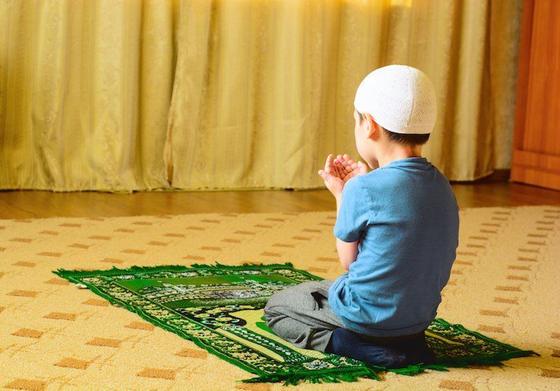
Dua, or supplication, is a central aspect of Islamic practice. It is a personal conversation with Allah that reflects…
Read more →Thirty minutes, your student numbers, an honest answer about whether we are a fit. Onboarding, training and data migration are included — there is nothing to sign to find out.