
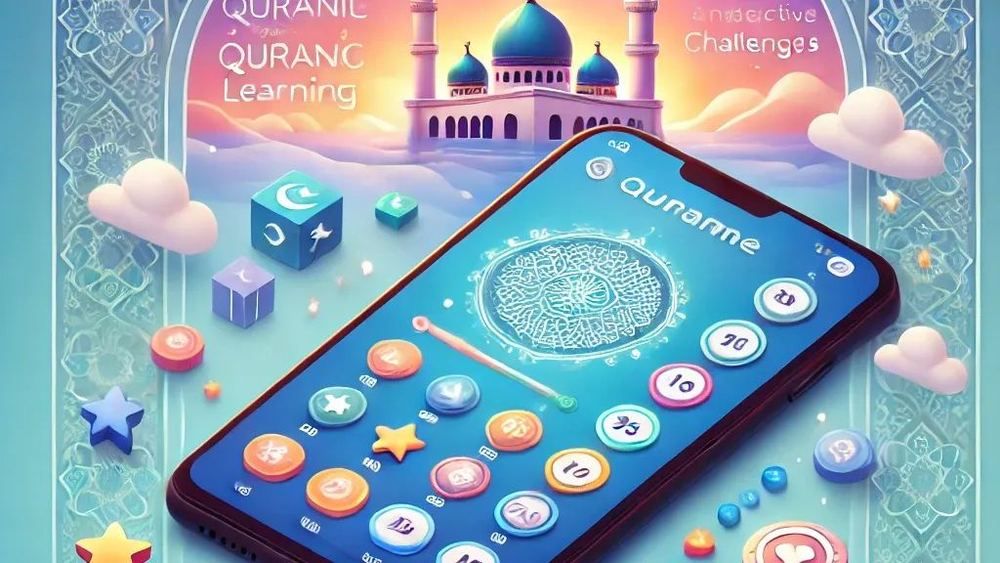
Overview: A New Era of Quran Learning
For centuries, Muslims have memorised the Quran through repetition, recitation circles, teacher-student mentorship, and community learning environments. These traditional methods remain deeply valuable and spiritually enriching. However, today’s children are growing up in a digital world shaped by interactivity, instant feedback, storytelling, and game-like engagement. As a result, Islamic education — particularly Quran memorisation — is evolving.
This evolution doesn’t replace the sacredness of traditional learning. Instead, it enhances it. Digital resources that use gamification — the integration of game-based elements such as levels, badges, rewards, interactive visuals, quizzes, and challenges — add excitement, structure, and motivation to a child’s Quran learning journey.
Gamified Quran memorisation is not about turning the Quran into a “game”. Rather, it applies proven educational psychology principles to help children stay motivated, practice consistently, and build stronger long-term retention — all while nurturing a love for Allah’s words.
In this article, we explore the key benefits of gamified learning for Quran memorisation and how modern tools aligned with Islamic values can support today’s families and educators.
One of the biggest challenges in Quran memorisation is sustaining a child’s interest and consistency. Long passages, repetition cycles, and pronunciation drills can feel overwhelming.
Gamification directly addresses this.
When children earn:
they experience instant positive reinforcement. This taps into the human reward system, releasing dopamine — the “motivation chemical” — which encourages children to repeat the behaviour.
Breaking down surahs into bite-sized achievements means each step is celebrated. Completing a verse, revising accurately, or mastering tajwīd rules becomes a moment of pride.
This gradually builds:
Learning Becomes Playful, Not Stressful
A child who enjoys a learning activity is far more likely to return to it daily. When Quran memorisation is presented as an interactive journey with characters, stories, and rewards, it becomes fun, lowering resistance and boosting engagement.
Repetition (takrār) is essential in hifz. Traditional memorisation relies heavily on repeating verses multiple times — but children may:
Gamified learning for Quran memorisation solves this with smart repetition.
Many gamified tools use algorithms that are widely used in language learning and cognitive training. These systems:
This improves retention, ensuring memorised verses stay strong over time.
Instead of simply rereading verses, children may:
These small “challenges” keep revision enjoyable.
Gamified apps instantly show:
This structured feedback is something traditional methods often lack, especially when a teacher isn’t present 24/7.
Memorising the Quran requires planning and routine. Without a structured approach, children may:
Gamified systems offer built-in structure, removing the guesswork.
Gamified Quran apps often provide:
This guidance helps parents and educators manage lessons with confidence.
A major benefit of gamification is visual tracking — something extremely motivating for children.
Progress bars, recitation meters, and revision streaks create a tangible sense of achievement. Children can see how far they’ve come, which encourages them to keep going.
Streaks — completing a task for consecutive days — are powerful psychological motivators. When applied to Quran memorisation, streaks help build:
This supports the Quranic principle of consistency:
“The most beloved deeds to Allah are those done consistently, even if small.”
(Sahih Bukhari)
Every child learns differently, but traditional methods may not always adapt perfectly to:
Gamified learning caters to all.
Animations, highlighted text, colour-coded tajwīd rules, and visual cues help children better absorb information.
Gamified systems typically include:
This is invaluable for accurate pronunciation and imitation.
Touch-based activities — dragging words, tapping to reveal audio, rearranging ayat — help active learners stay engaged.
The combination of rewards, colourful animations, and micro-tasks keeps children attentive far longer than static memorisation sessions.
The most important long-term benefit of gamified memorisation is that it nurtures a positive emotional connection to the Quran.
When learning feels:
Children naturally want to come back again and again.
Some gamified apps incorporate small stories, characters, or quests. When children feel part of a “Quran journey,” they view memorisation as an adventure, not an obligation.
The fear of making mistakes is a major hurdle in Quran learning. Gamified systems remove that fear by providing gentle, private corrections — reducing embarrassment and boosting confidence.
If a child grows up with enjoyable Quran experiences, they are far more likely to:
Gamification doesn’t only support children — it empowers adults too.
Without a teacher present daily, parents often feel unsure about:
Gamified apps provide dashboards and analytics showing:
This helps parents stay involved with confidence.
Educators can integrate gamified tasks into:
This creates a blended environment where digital engagement complements traditional teaching.
Supports Remote or Self-Guided Learning
For families without access to full-time Quran teachers, gamified systems fill the gap by offering structure and support anytime, anywhere.
Some parents worry that games may distract from the seriousness of Quran memorisation. This is understandable — but gamified Quran apps are designed with Islamic ethics at the core.
When properly developed, gamification is:
Instead of frivolous prizes, children may earn:
Some apps incorporate:
This nurtures both memorisation and comprehension.
Learning in small, steady increments aligns beautifully with prophetic teaching on consistency.
One of the biggest challenges in hifz is maintaining previously memorised verses. Many children forget earlier surahs while focusing on new ones.
Gamified systems solve this by:
This ensures that long-term memorisation remains strong.
Gamification supports children across:
Pre-readers and early learners find it easier to stay engaged with sound-based, touch-based activities.
Gamified apps often provide:
This is extremely helpful for global Muslim families.
ADHD, dyslexia, and other challenges can make memorisation difficult. Gamified tools break tasks into manageable, rewarding steps, reducing frustration.
Gamified learning for Quran memorisation is not meant to replace teachers, parents, or traditional methods of learning. The most effective model is a hybrid approach, combining:
This creates a holistic, balanced Quran memorisation journey that is spiritually rooted and modern in its delivery.
Gamified learning has proven to be a powerful tool in modern education — and its benefits in Quran memorisation are increasingly clear. By blending Islamic values with engaging digital design, these systems:
In a world where children are constantly surrounded by digital stimulation, Islamic EdTech must meet them where they are — with tools that are meaningful, effective, and spiritually uplifting.
When designed thoughtfully, gamified Quran learning becomes more than just an educational tool. It becomes a doorway into a lifelong relationship with the Book of Allah.
Published 25 November 2025 in Learning technology. Questions? Get in touch.
Across the world, Islamic schools, weekend madrasas, and homeschool networks are undergoing a significant…
Read more →
Many parents deeply value Quran education but feel unsure about how to support it effectively at home. Questions such…
Read more →
If you’re a Muslim parent or educator in 2025, you probably ask the same question every weekend: How do I make screen…
Read more →Thirty minutes, your student numbers, an honest answer about whether we are a fit. Onboarding, training and data migration are included — there is nothing to sign to find out.