
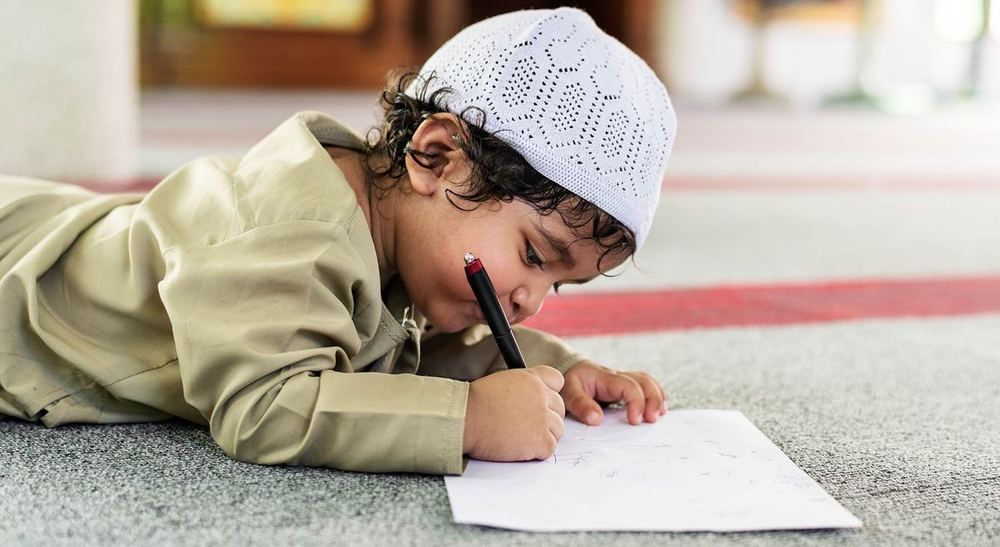
The early years of a child’s life are crucial for developing faith, character, and understanding of the world around them. For Muslim children, learning essential Islamic lessons before age 10 establishes a strong foundation for moral behaviour, spiritual growth, and religious understanding. Early exposure to Islamic teachings helps children internalise values, understand their faith, and practise ethical and responsible behaviour.
Parents, educators, and caregivers play a vital role in guiding children through these formative years. By introducing Islamic lessons in age-appropriate ways, children can develop a meaningful connection with Allah, appreciate the teachings of the Prophet Muhammad ﷺ, and understand the importance of prayer, morality, and community.
In this piece, we explore the key Islamic lessons that every Muslim child should learn before reaching the age of 10, offering guidance on practical strategies, teaching methods, and real-life applications.
The most fundamental lesson in Islam is the concept of Tawheed, the belief in the oneness of Allah. Children should learn that Allah is the Creator, Sustainer, and the only one worthy of worship. Understanding Tawheed helps children develop a clear sense of faith, reliance on Allah, and a foundation for all other Islamic teachings.
Teaching Tawheed can begin with simple explanations about Allah’s creation, power, and mercy. Parents can use examples from nature, such as the sun, rain, and animals, to illustrate Allah’s role in sustaining life. Stories from the Quran that demonstrate Allah’s attributes and guidance also make the concept relatable. By learning Tawheed early, children understand that their actions, prayers, and intentions have spiritual significance and are connected to a higher purpose.
Alongside Tawheed, children should become familiar with the names and attributes of Allah. Learning attributes such as Ar-Rahman (The Most Merciful), Al-Hakeem (The Wise), and Al-Ghafoor (The Forgiving) helps children comprehend Allah’s qualities and His relationship with His creation.
Parents can teach these names through simple storytelling, repetition, songs, or interactive activities. Explaining the meanings in age-appropriate language allows children to relate the attributes to their daily experiences. For instance, understanding that Allah is Al-Hakeem helps children trust in His wisdom, while learning that He is Ar-Rahman encourages them to seek mercy and show compassion. Recognising these attributes strengthens children’s connection with Allah and shapes their understanding of His guidance in life.
Establishing the practice of daily prayers is essential before the age of 10. Children should learn the significance of Salah, its timings, and how to perform it properly. Introducing prayer in small steps, starting with shorter recitations and gradually increasing complexity, helps children develop consistency and understanding.
Parents can demonstrate the physical actions, recitations, and intentions involved in prayer while explaining its purpose. Encouraging children to pray with understanding, rather than mere repetition, ensures mindfulness and spiritual engagement. Early exposure to daily worship instils discipline, gratitude, and a sense of responsibility, reinforcing moral development and a strong connection to faith.
The Quran is the foundation of Islamic knowledge and guidance. Among the lessons every Muslim child should learn before 10 is the Book of Allah, intended to guide humanity, and that it contains moral, ethical, and spiritual teachings.
Introducing the Quran to children can involve listening to recitations, learning short verses, and understanding simple meanings. Storytelling from the Quran and interactive discussions about lessons help children internalise ethical principles and spiritual messages. Encouraging curiosity about the Quran fosters a lifelong love for reading, reflection, and application. Early familiarity with the Quran helps children develop literacy, comprehension, and moral reasoning in alignment with Islamic values.
Before age 10, children should be introduced to the core beliefs of Islam, including the pillars of faith: belief in Allah, angels, divine books, prophets, the Day of Judgement, and Qadr (divine decree). Simple explanations, stories, and examples make these concepts comprehensible.
Additionally, children should learn basic Islamic practices such as fasting during Ramadan, giving charity, and maintaining cleanliness. Explaining the purpose behind each practice and its moral significance helps children appreciate the connection between faith and daily life. Understanding core beliefs and practices provides children with a framework for ethical behaviour and spiritual development, forming the foundation for more advanced knowledge later in life.
Ethics and morality are central to Islam, and children should be guided to practise honesty, kindness, patience, and generosity. Parents and educators can use real-life examples, stories, and reflective discussions to illustrate these values.
As part of the lessons every Muslim child should learn before 10, teaching ethical behaviour involves modelling good character, explaining consequences of actions, and praising positive behaviour.
Simple acts, such as sharing, helping others, speaking politely, and apologising for mistakes, reinforce moral development. Children who internalise ethical values early develop empathy, responsibility, and a sense of justice, which shape their character and interactions with others throughout life.
Gratitude is a recurring theme in Islamic teachings, and children should learn to recognise and appreciate the blessings in their lives. Practising gratitude helps children develop humility, contentment, and mindfulness.
Parents can encourage children to thank Allah during meals, acknowledge the support of family members, and reflect on daily blessings. Storytelling, reflective conversations, and gratitude journals can also help children express appreciation. Instilling the habit of gratitude nurtures emotional intelligence, positive thinking, and a strong spiritual connection to Allah.
Respect is a fundamental aspect of Islamic character. Children should understand the importance of honouring parents, respecting elders, and treating peers and community members with consideration.
Teaching respect can include encouraging polite language, attentive listening, obedience within reason, and appreciation for others’ efforts. Parents can explain the spiritual and social significance of respect, using Quranic verses and Hadith as guidance. Early lessons in respect foster empathy, cooperation, and strong interpersonal skills, shaping children into well-rounded individuals who navigate social relationships ethically.
Patience and self-discipline are essential qualities for both spiritual and personal growth. Children should learn that waiting, perseverance, and controlled behaviour are valued in Islam.
Parents can teach patience through small, age-appropriate challenges, encouraging children to complete tasks, wait their turn, or practise restraint in daily life. Praise and positive reinforcement help reinforce these traits. Learning patience prepares children to manage frustration, make thoughtful decisions, and adhere to moral and spiritual obligations consistently.
Charity is an important value in Islam, and children should learn the significance of helping others. Simple acts, such as sharing toys, assisting family members, or participating in community service, illustrate the practical application of charity.
Parents can explain the spiritual rewards of giving, emphasising empathy, compassion, and generosity. Age-appropriate activities, such as donating a portion of savings or contributing to community projects, reinforce these lessons. Early exposure to charitable behaviour helps children develop a sense of social responsibility, ethical awareness, and spiritual fulfilment.
Honesty and trustworthiness are essential moral principles in Islam. Children should learn that truthfulness, keeping promises, and acting with integrity are highly valued.
Parents can model honesty in daily interactions, praise truthful behaviour, and explain the consequences of dishonesty. Storytelling and real-life examples help children understand why trustworthiness is essential for healthy relationships and spiritual integrity. Early practice of honesty and integrity shapes children into reliable, responsible, and morally grounded individuals.
Islamic teachings emphasise care for the environment, animals, and all of Allah’s creation. Children should learn that being responsible, kind, and respectful towards nature is part of their faith.
Parents can encourage recycling, conserving resources, and showing kindness to animals, explaining the spiritual significance of these actions. Understanding stewardship over the environment fosters awareness, empathy, and ethical responsibility, preparing children to make thoughtful and conscientious choices.
Children should also learn the importance of belonging to and supporting the Muslim community. Participating in mosque activities, community events, and social gatherings teaches cooperation, empathy, and shared responsibility.
Parents can involve children in group learning, charity projects, and family participation in religious celebrations. Experiencing community engagement reinforces ethical behaviour, social responsibility, and a sense of spiritual identity. Children who connect with their community are more likely to develop compassion, respect, and confidence in their faith.
Reflection and personal prayer are important for children to internalise lessons and build a connection with Allah. Parents can encourage children to pray, ask for guidance, and reflect on their actions and experiences.
Simple prayers and reflection exercises help children understand the purpose of worship, the value of gratitude, and the importance of seeking guidance. Over time, these practices nurture mindfulness, ethical behaviour, and a strong spiritual identity.
Teaching Islamic lessons every Muslim child should learn before age 10 is essential for developing a strong foundation of faith, character, and moral understanding. Core lessons include belief in Allah, understanding His attributes, daily worship, Quranic knowledge, moral and ethical values, gratitude, patience, honesty, respect, charity, and community engagement.
Parents and educators can make these lessons engaging, age-appropriate, and meaningful through storytelling, interactive activities, hands-on experiences, reflective discussions, and positive reinforcement. Consistent guidance, role modelling, and supportive environments help children internalise Islamic principles, fostering spiritual growth, moral reasoning, and ethical behaviour.
By focusing on these lessons, children develop a strong sense of faith, responsibility, and connection to Allah, enabling them to navigate challenges, build character, and thrive in both spiritual and social dimensions. Early exposure ensures that Islamic education becomes a natural and integral part of their lives, preparing them to embrace their faith with understanding, reflection, and sincerity.
Children who learn these essential lessons are better equipped to grow into spiritually aware, morally responsible, and compassionate individuals, forming a generation that embodies the principles of Islam in their daily lives.
Published 31 March 2026 in Parenting. Questions? Get in touch.
The rise of digital technology has transformed the way children learn, communicate, and interact with the world.…
Read more →
Islamic education is not only about learning prayers, memorising Quranic verses, or understanding rituals; it is also…
Read more →
Islamic education forms the foundation of a child’s moral, spiritual, and intellectual development. Teaching children…
Read more →Thirty minutes, your student numbers, an honest answer about whether we are a fit. Onboarding, training and data migration are included — there is nothing to sign to find out.