
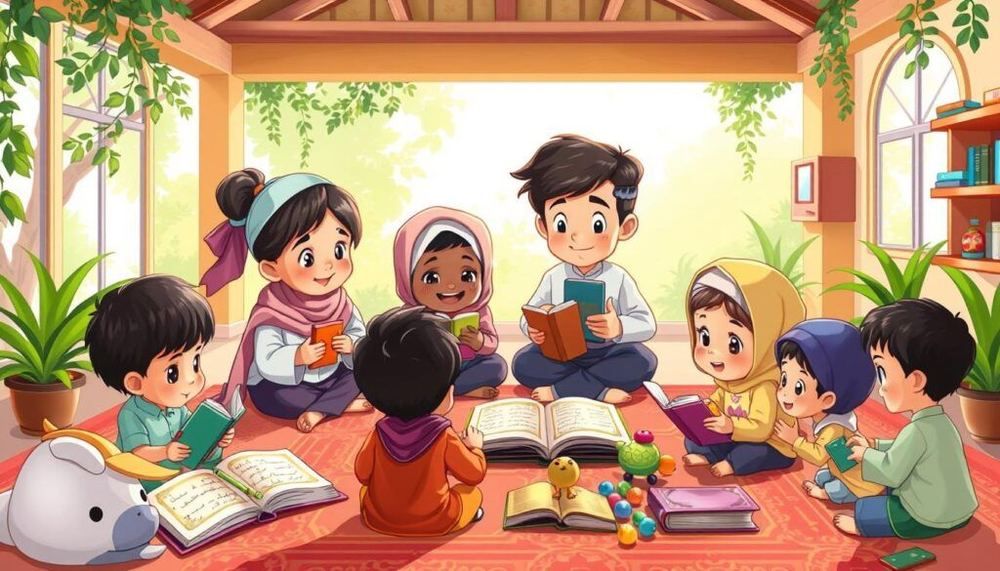
Islamic education forms the foundation of a child’s moral, spiritual, and intellectual development. Teaching children about the Quran, Hadith, and Islamic values helps them build character, understand their faith better, and navigate the world ethically.
However, many parents find that traditional methods of teaching can sometimes feel rigid or dull, particularly when conducted at home. Making Islamic education enjoyable and engaging is crucial for instilling a love for learning and ensuring that children internalise both knowledge and values.
Creating a fun and interactive learning environment does not mean compromising on the depth or authenticity of Islamic teachings. On the contrary, it enhances comprehension, memorisation, and application by presenting lessons in ways that resonate with a child’s interests, learning style, and natural curiosity.
In fact, parents who incorporate creativity, play, and structured guidance can make Islamic education at home both enjoyable and effective.
This article serves as an intuitive guide for parents on how to make Islamic education fun for children, offering practical strategies and insights which will help foster lifelong learning, spiritual growth, and strong character.
Children learn best when they are actively engaged, emotionally invested, and able to interact with content in meaningful ways. Passive learning through repetition or rote memorisation may achieve short-term results but often fails to cultivate long-lasting understanding or interest.
Incorporating fun into Islamic education engages multiple senses, promotes participation, and encourages critical thinking. Engaged learners are more likely to memorise Quranic verses, understand moral lessons, and appreciate the relevance of Islamic teachings in their daily lives. Fun learning experiences also foster a positive attitude toward faith, turning education into an enjoyable part of a child’s routine rather than a chore.
Parents who prioritise engagement alongside knowledge help children develop both spiritual awareness and intellectual curiosity.
The home environment plays a pivotal role in a child’s attitude toward learning. A positive, supportive, and structured atmosphere encourages exploration, participation, and motivation.
Parents can create a dedicated space for Islamic learning, equipped with books, digital resources, visual aids, and comfortable seating. Reducing distractions, maintaining a consistent schedule, and fostering a warm and encouraging atmosphere helps children focus and associate learning with positive experiences.
A positive environment signals to children that their efforts are valued and that Islamic education is a priority. It also allows parents to model enthusiasm for learning, reinforcing the importance of faith and study in a child’s daily life.
The Quran is the heart of Islamic education, and interactive learning techniques can make its study more enjoyable. Audio and visual tools, interactive apps, and gamified exercises allow children to listen to recitations, follow along with the text, and receive immediate feedback on pronunciation and Tajweed.
Parents can engage children in games that involve matching verses to their meanings, sequencing stories from the Quran, or identifying moral lessons from specific passages. Using rewards, points, or progress charts creates motivation while making learning a fun and dynamic activity.
Interactive Quran learning helps children internalise verses, improves retention, and strengthens their emotional connection to the teachings, fostering both spiritual and intellectual development.
Stories from the lives of the Prophets, companions, and righteous individuals provide powerful examples of Islamic values. Storytelling transforms lessons from abstract concepts into relatable narratives that children can understand and apply.
Parents can narrate stories using expressive language, visual aids, or even small role-play exercises. Discussing the lessons from each story encourages reflection and critical thinking, helping children understand how honesty, compassion, patience, and generosity manifest in daily life.
Storytelling also engages imagination, enhances memory, and provides context, ensuring that moral and spiritual lessons are not only learned but experienced and internalised.
Play is a natural way for children to learn, and gamification enhances motivation, engagement, and comprehension. Activities such as quizzes, interactive games, and challenges encourage children to actively participate in Islamic learning.
Parents can create home-based competitions for memorising short Quranic verses, identifying key points from Hadith, or demonstrating knowledge of Islamic history. Rewards, levels, and badges provide a sense of achievement and make learning enjoyable.
Gamified learning encourages consistency and effort, helping children develop good study habits while internalising knowledge and ethical values. It also reinforces the idea that learning can be enjoyable and fulfilling rather than solely a task or obligation.
Digital and multimedia resources can make Islamic education engaging and accessible. Videos, animations, audio recitations, and interactive worksheets appeal to different learning styles and keep children interested.
For example, animated videos explaining Quranic stories or ethical principles provide a visual and auditory context that enhances comprehension. Interactive worksheets, quizzes, and apps allow children to practice and test their understanding, reinforcing knowledge through repetition and feedback.
Multimedia resources also help parents supplement their teaching, providing structured content and creative approaches that make learning dynamic and immersive.
When it comes to how to make Islamic education fun for children, hands-on activities are a great way for children to connect theoretical knowledge with practical experience. Arts and crafts, role-playing, and simple experiments can be adapted to Islamic education.
Parents might encourage children to create illustrated storybooks based on Quranic narratives, design posters that depict moral lessons, or participate in role-playing scenarios that demonstrate ethical decision-making. Activities that involve creativity, problem-solving, and collaboration reinforce learning while keeping children engaged and motivated.
Hands-on experiences make abstract concepts tangible, helping children internalise ethical and spiritual lessons in a meaningful and memorable way.
Reflection is essential for understanding and applying Islamic teachings. Parents can encourage children to think critically about the lessons they learn, ask questions, and discuss how principles relate to their daily experiences.
After reading a Quranic verse or learning a Hadith, parents might ask, “How can we practise this lesson at home or school?” or “What does this story teach us about helping others?” Guided discussions help children connect moral teachings to behaviour, develop empathy, and apply lessons in real-life situations.
Reflection and discussion cultivate self-awareness, ethical reasoning, and spiritual growth, ensuring that learning extends beyond memorisation to meaningful application.
Consistency reinforces habits and ensures that Islamic learning becomes a regular part of a child’s life. Parents can establish daily routines that include Quranic recitation, moral discussions, prayer, and ethical reflection.
Short, focused sessions are often more effective than long lessons, particularly for younger children. Consistent routines help children internalise the importance of learning, develop discipline, and integrate faith into their daily lives naturally.
A balanced routine ensures children experience structured learning while allowing flexibility for creativity, play, and exploration, making education both effective and enjoyable.
Positive reinforcement motivates children and strengthens learning outcomes. Praising effort, acknowledging progress, and celebrating achievements encourages children to continue practising and applying Islamic teachings.
Parents might use verbal praise, stickers, certificates, or small rewards to recognise accomplishments such as memorising a verse, completing a moral exercise, or demonstrating good behaviour. Positive reinforcement builds confidence, encourages persistence, and creates a positive association with learning.
By reinforcing success, children develop intrinsic motivation, a love for learning, and a desire to act ethically and spiritually.
Family involvement enhances the effectiveness of Islamic education at home. Participating in learning activities together strengthens bonds, provides role modelling, and creates a shared spiritual experience.
Parents can read Quran together, discuss moral stories, participate in hands-on projects, or guide children through interactive digital platforms. Family involvement also ensures that children feel supported, valued, and encouraged in their learning journey.
Collaborative family engagement reinforces the idea that Islamic education is a continuous, lived experience rather than a series of isolated lessons.
Children learn best when content is relevant to their age, interests, and cognitive abilities. Parents should adapt lessons to be age-appropriate, using simple explanations for younger children and more detailed discussions for older learners.
Incorporating topics that interest children, such as stories, animals, nature, or social situations, can make lessons more relatable, offering parents better insights into how to make Islamic education fun for children.
Age-appropriate adaptation ensures that children remain engaged, comprehend the material, and see the relevance of Islamic teachings in their lives.
Tailoring learning to individual needs promotes sustained interest and fosters deeper understanding.
Fun learning should encompass both spiritual knowledge and ethical development. Teaching children about prayer, worship, and Quranic recitation is equally important as guiding them in honesty, kindness, generosity, and patience.
Parents can integrate ethical discussions into lessons, highlight moral lessons from Quranic stories, and encourage children to apply these principles in their interactions at home, school, and the community. Balancing spiritual and ethical education ensures that children develop a holistic understanding of Islam, internalising both beliefs and behaviours.
Creativity enhances engagement and comprehension. Children can explore Islamic concepts through drawing, writing, storytelling, and problem-solving activities.
For example, children might illustrate a story from the Quran, write reflections on ethical lessons, or create role-play scenarios to practise good manners and moral decision-making. Creative exploration allows children to express understanding in personal ways, reinforcing both knowledge and values.
Encouraging creativity transforms learning into an interactive and enjoyable process, fostering intellectual growth alongside spiritual development.
Making Islamic education fun for children at home requires a combination of creativity, interaction, reflection, and consistency. By incorporating interactive Quranic learning, storytelling, play, multimedia resources, hands-on activities, discussion, and family participation, parents can create an engaging and meaningful learning environment.
These strategies foster memorisation, comprehension, and ethical development while nurturing a love for learning and a connection to faith. Age-appropriate adaptation, positive reinforcement, and consistent routines ensure that children internalise moral and spiritual lessons effectively.
A fun and interactive approach to Islamic education helps children develop a strong character, moral awareness, and spiritual foundation. By integrating joy, engagement, and reflection, parents can guide children to embrace their faith confidently, apply ethical principles in daily life, and cultivate lifelong habits of learning, worship, and compassion.
Islamic education at home can be both effective and enjoyable, equipping children with knowledge, values, and spiritual grounding that prepare them to navigate life ethically, morally, and responsibly.
Published 30 March 2026 in Parenting. Questions? Get in touch.

Children hold a special place in Islam, and the way they are raised profoundly influences their character, faith, and…
Read more →
The rise of digital technology has transformed the way children learn, communicate, and interact with the world.…
Read more →
Islamic education is not only about learning prayers, memorising Quranic verses, or understanding rituals; it is also…
Read more →Thirty minutes, your student numbers, an honest answer about whether we are a fit. Onboarding, training and data migration are included — there is nothing to sign to find out.