
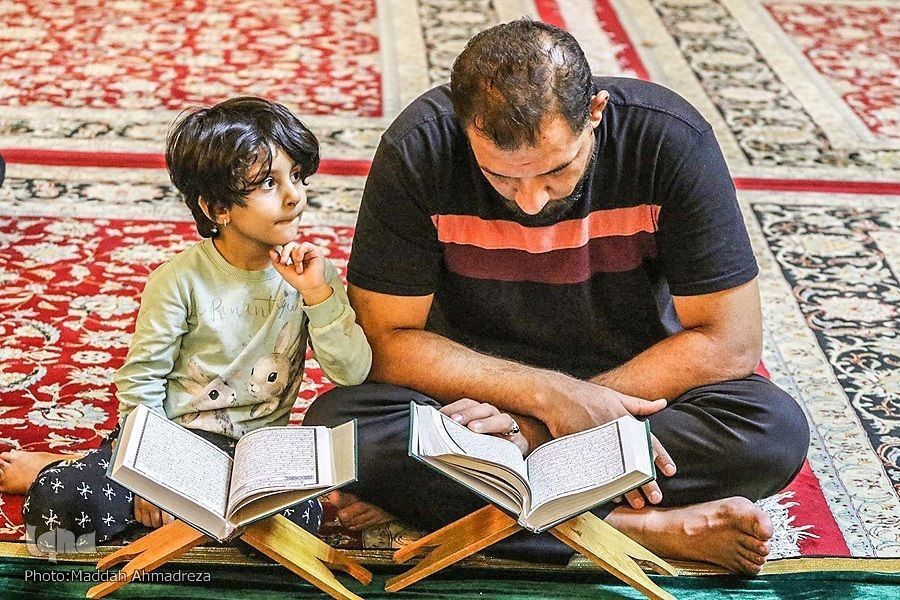
Children today are growing up in a world unlike any previous generation. Smartphones, social media, online entertainment, gaming, artificial intelligence, and instant access to information have become part of daily life.
In 2026, technology influences how children think, communicate, learn, and spend their time. While digital advancements offer many opportunities, they also present serious challenges for families trying to nurture strong Islamic values and consistent religious practice.
For many parents and educators, one of the biggest concerns is how to help children remain spiritually connected in a hyper-digital environment filled with distractions, fast-paced content, and competing influences. Encouraging children to practise faith today requires more than simply teaching rules or routines. It requires building emotional connection, understanding, consistency, and relevance.
Children need to see faith not as a separate part of life but as something meaningful that guides them in every environment, including the digital world. This requires thoughtful parenting, positive role modelling, balanced technology use, and creating experiences that help children genuinely value their relationship with Allah.
This article explores the best ways to encourage children to practice faith in a hyper-digital world, offering practical strategies for parents, teachers, and families.
Before addressing solutions, it is important to understand the challenges children face today.
Modern digital environments are designed to capture attention continuously. Social media platforms, games, streaming services, and short-form content compete for children’s focus every moment of the day. These environments often encourage instant gratification, constant stimulation, and reduced attention spans.
At the same time, children are exposed to a wide variety of ideas, values, and behaviours online. Some of these may conflict with Islamic teachings or create confusion about identity, purpose, and morality.
Common challenges include:
In such an environment, practising faith consistently can become difficult unless families intentionally create supportive structures and habits.
One of the most effective ways to encourage children to practice faith is by building their relationship with faith through love, positivity, and connection.
Children who associate Islam only with restrictions or punishment may struggle to develop genuine attachment to religious practice. In contrast, children who experience Islam as a source of comfort, guidance, mercy, and meaning are more likely to remain connected to it long-term.
Parents and teachers should help children understand:
For example, instead of presenting salah purely as an obligation, parents can explain how prayer provides peace, gratitude, and closeness to Allah.
Positive emotional connection is especially important in a digital world where children are constantly seeking comfort, belonging, and identity.
Children are deeply influenced by what they observe.
In a hyper-digital world, where children are exposed to countless external influences, parental example becomes even more important. Children notice whether adults prioritise prayer, use technology responsibly, and demonstrate Islamic values in daily life.
If parents encourage limited screen time but spend most of their own time on devices, children may struggle to take those messages seriously.
Strong role modelling includes:
Children learn faith most powerfully through lived experience rather than lectures alone.
Technology itself is not the problem; the issue is often unstructured and excessive use.
Families should establish healthy digital boundaries that allow children to benefit from technology without becoming consumed by it.
Helpful strategies include:
These boundaries help children understand that technology should serve life rather than dominate it.
Importantly, boundaries should be consistent and reasonable rather than excessively strict or unpredictable.
One of the strongest ways to encourage children to practice faith is by making worship a visible and natural part of everyday family life.
Prayer should not feel isolated or disconnected from normal routines. Instead, it should become a shared family experience.
Parents can:
Children are more likely to develop attachment to salah when they associate it with peace, family connection, and emotional warmth.
In a digital world filled with constant stimulation, prayer can become an anchor that provides stability and calm.
Technology can also be used to strengthen faith when approached wisely.
There are now many beneficial digital resources available for children, including:
Parents can guide children towards digital content that supports Islamic values rather than merely restricting harmful material.
For example, younger children may enjoy Islamic cartoons or gamified Quran learning platforms, while older children may benefit from educational podcasts or lectures.
The goal is to teach children that technology itself can be used for beneficial and meaningful purposes.
Children need guidance in understanding the online world critically.
Rather than simply banning certain platforms or ideas, parents should help children develop the ability to evaluate content independently.
This includes discussing:
Open conversations help children become thoughtful and resilient rather than simply obedient.
When children understand why certain values matter, they are more likely to internalise them.
In many cases, children become overly attached to digital environments because they are seeking emotional fulfilment, attention, or belonging.
Strong parent-child relationships are therefore essential.
Parents should prioritise:
Children who feel emotionally secure at home are often less vulnerable to unhealthy online influences.
Faith becomes more meaningful when it is connected to loving relationships and positive experiences.
Traditional teaching methods may not always hold the attention of digitally immersed children.
Islamic learning should therefore be engaging, interactive, and relevant.
This can include:
For example, instead of teaching Islamic history purely through memorisation, parents and teachers can use maps, videos, timelines, and role-play activities.
Children are more likely to remain interested in Islam when learning feels meaningful and engaging.
The hyper-digital world often leaves little room for silence or reflection.
Children are constantly consuming information, entertainment, and stimulation. As a result, many struggle with focus, patience, and emotional regulation.
Islamic practices such as prayer, Quran recitation, dhikr, and dua can help children develop mindfulness and emotional balance.
Parents can encourage reflection by:
These habits help children develop inner awareness and spiritual depth.
Children growing up in digital environments are exposed to countless ideas about identity and self-worth.
Strong Islamic identity is therefore increasingly important.
Parents should help children feel proud of their faith by:
Confidence in identity helps children navigate online environments more securely and resist negative influences.
Excessive criticism or pressure can damage a child’s relationship with faith.
In a world where children already face emotional stress, comparison, and pressure online, home should feel supportive rather than overwhelming.
Parents should avoid:
Instead, encouragement, patience, and gradual improvement should be emphasised.
Children need space to grow while feeling loved and supported.
Digital environments can sometimes replace real social interaction.
Strong community connection helps children experience faith collectively rather than individually.
Families should encourage:
Children who experience Islam socially are more likely to remain connected to it long-term.
Community creates belonging, accountability, and positive influence.
Completely isolating little ones and young adults from technology is rarely realistic or sustainable and will likely not encourage children to practice faith.
Instead, children should learn balance.
They need guidance in understanding how to:
Islam teaches moderation, and this principle applies strongly to digital life.
Balanced habits are more sustainable than extreme restrictions.
Teenagers face particular challenges in the digital world, including social pressure, identity confusion, and emotional struggles.
At this stage, authoritarian approaches may push young people further away.
Parents should instead focus on:
Teenagers need space to ask questions and discuss challenges openly.
Supporting them with empathy strengthens both faith and family relationships.
Alongside practical strategies, spiritual effort remains essential.
Parents should regularly make dua for their children’s guidance, protection, and strength in faith.
Throughout Islamic tradition, the importance of praying for one’s children is emphasised repeatedly.
In a rapidly changing digital world, dua remains one of the most powerful tools available to parents.
Ultimately, the goal is not simply short-term obedience but long-term connection to Allah.
Children should develop faith that continues into adulthood, even when external supervision decreases.
This requires:
The digital world will continue evolving, but children grounded in faith, understanding, and character will be better equipped to navigate future challenges.
Encouraging children to practice faith in a hyper-digital world is one of the greatest challenges facing modern Muslim families. However, it is also one of the greatest opportunities.
Technology itself is not inherently harmful. The key lies in how families approach it, manage it, and balance it with spiritual growth and meaningful human connection.
By building faith through love, creating healthy digital boundaries, leading by example, encouraging reflection, and maintaining strong family relationships, parents can help children develop a sincere and lasting connection to Islam.
In a world filled with distractions, faith can become a source of clarity, peace, and purpose. Children who learn to integrate Islam into every aspect of life, including the digital world, will be better prepared to navigate modern challenges while remaining firmly connected to their values and identity.
Published 6 May 2026 in Parenting. Questions? Get in touch.

The digital transformation of education has changed the way students learn across the world, and Islamic education is…
Read more →
Faith development has always been one of the most important aspects of raising children in Islam. However, in 2026…
Read more →
Raising children in today’s world presents unique challenges, particularly when it comes to maintaining a strong…
Read more →Thirty minutes, your student numbers, an honest answer about whether we are a fit. Onboarding, training and data migration are included — there is nothing to sign to find out.